Thinking about renting your Carolina Beach or Wilmington home by the night or week? North Carolina is friendlier to short-term rentals than many states, but there are still rules, taxes and paperwork, and some of them catch new owners by surprise. This guide covers what applies in New Hanover County as of fall 2026, in plain language.
This is an overview, not legal or tax advice. Rules change; confirm with the offices linked below, or talk with an attorney or accountant, before you rent.
The short version
- No rental permit or registry. North Carolina towns can't require one just to rent a home.
- Zoning still applies. In Wilmington, whole-house rentals have specific rules on operators, parking, events, insurance and posted notices.
- Two taxes on every stay: a 6% room occupancy tax, reported monthly to New Hanover County, and North Carolina sales tax, filed with the state.
- Your HOA may have the final word. Covenants can limit or ban short-term rentals even where the town allows them.
- Insurance matters. A standard homeowner's policy may not cover a rental; Wilmington requires $500,000 in liability coverage.
No permit or registration to rent
In 2022, in Schroeder v. City of Wilmington, the North Carolina Court of Appeals held that state law doesn't let cities require owners to register or get a permit just to rent a home. Wilmington ended its rental registration and refunded the registration fees.
That doesn't mean anything goes. Towns can still regulate where and how short-term rentals operate through zoning, and the everyday rules on noise, trash, parking and safety apply to every rental, the same as to any home.
Wilmington's short-term lodging rules
The City of Wilmington defines short-term rentals as rentals of 29 days or less, and regulates them through its zoning code (Section 18-157). There are two types:
- Homestays, where the owner or a resident lives on site and rents rooms.
- Whole-house lodging, where the entire home is rented, with no owner on site.
For a whole-house rental, the city's short-term lodging page requires:
- A local operator available 24 hours a day and located within 25 miles of the property. This is the person who answers when a guest is locked out at midnight or a neighbor calls about noise.
- Off-street parking: at least one space per bedroom, on an all-weather surface. If the lot can't fit them, documented leased spaces in a nearby deck or lot can count.
- No events: parties, weddings, receptions, classes and similar gatherings aren't allowed on the property.
- Insurance: commercial general liability coverage of at least $500,000 per occurrence, in force whenever the home is rented.
- A posted notice, kept current and easy to see, with the operator's name and phone number, the address, the maximum number of overnight guests, garbage collection days, the Wilmington Police non-emergency number and a statement that large gatherings aren't allowed.
Before you buy, ask the city's zoning staff (910-254-0900, zoning@wilmingtonnc.gov) to confirm that short-term lodging is allowed in your property's zoning district, and that the lot can meet the parking requirement. It's the most expensive thing to find out after closing.
Carolina Beach and Kure Beach
The beach towns don't require a rental permit either. The main obligation is collecting and paying occupancy tax (below), along with each town's everyday rules for parking, trash, noise and the beach itself.
A few town rules come up with guests again and again, and are worth putting in your house guide:
- Dogs on the beach have seasonal hours, and they're never allowed on the Carolina Beach boardwalk. See dogs on Carolina Beach.
- Golf carts are being phased out in Carolina Beach (no new permits; banned from January 1, 2028). Guests should rent plated, street-legal LSVs. See our golf cart guide.
- Paid parking runs March 1 to October 31 in Carolina Beach. If your home doesn't have enough spaces, tell guests about the town's weekly visitor passes.
Room occupancy tax: 6%
Every short-term rental in New Hanover County charges a room occupancy tax. The county lists a 6% rate for the county and for Wilmington, Wrightsville Beach, Carolina Beach and Kure Beach.
- Who collects it: the operator, meaning you or your manager, charges it to guests on every stay.
- How to file: report monthly through the county's Room Occupancy Tax portal. Reports are due by the 20th of the month after the stays.
- Penalties: the county notes that late reports can bring civil and criminal penalties, so file on time every month.
See the county's occupancy tax page, or call New Hanover County Finance at 910-798-7113.
North Carolina sales tax
Short-term accommodations are also subject to North Carolina's state and county sales tax, filed with the NC Department of Revenue. A few points from the state's rules:
- Fees can count. NCDOR treats a booking site's facilitation fee as part of the taxable price; ask your accountant how to handle cleaning and other fees.
- The 15-day exemption is narrow. A private residence rented for fewer than 15 days in a calendar year can be exempt, but not when it's rented through a booking site or another accommodation facilitator.
- Check the current rate. NCDOR publishes the combined rate for each county; check it before you set up your listings.
Booking sites and taxes
Airbnb, Vrbo and other platforms may collect and pass on some of these taxes for you, but not necessarily all of them, and not in the same way for every listing. Direct bookings are always on you. Look at each platform's tax settings for your listing, and keep records of what each one collected so your monthly filings match.
HOAs and condo associations
An HOA or condo association can limit or ban short-term rentals even where the town allows them. Many set their own rules: minimum stays, a cap on guests, registration with the association, parking limits or fees. Read the covenants and rules before you buy, and ask the association directly if anything is unclear.
Insurance
A standard homeowner's policy may not cover a home rented to guests, and booking-site host protections aren't the same as your own policy. Ask your agent about a policy written for short-term rentals, including liability and loss of rental income after a covered loss. On the coast, ask about wind and flood coverage, too. In Wilmington, make sure your liability limit meets the city's $500,000 requirement.
A checklist before your first guest
- Confirm zoning (Wilmington) and read your HOA or condo rules.
- Get short-term rental insurance with the right liability limit.
- Set up occupancy tax reporting with New Hanover County Finance.
- Register for sales tax with the NC Department of Revenue.
- Check what each booking site collects for you.
- In Wilmington: line up a local operator within 25 miles and post the required notice.
- Write a house guide with parking, trash days, beach rules and quiet hours.
Want someone to handle it?
Navigate Rentals manages vacation rentals across Carolina Beach, Wilmington and the coast: listings on 15+ booking channels, dynamic pricing, guest communication, housekeeping, maintenance and occupancy tax compliance. See our short-term rental management services, get a free rental income projection, or read how much a Carolina Beach rental can earn.
Frequently Asked Questions
More From the Blog
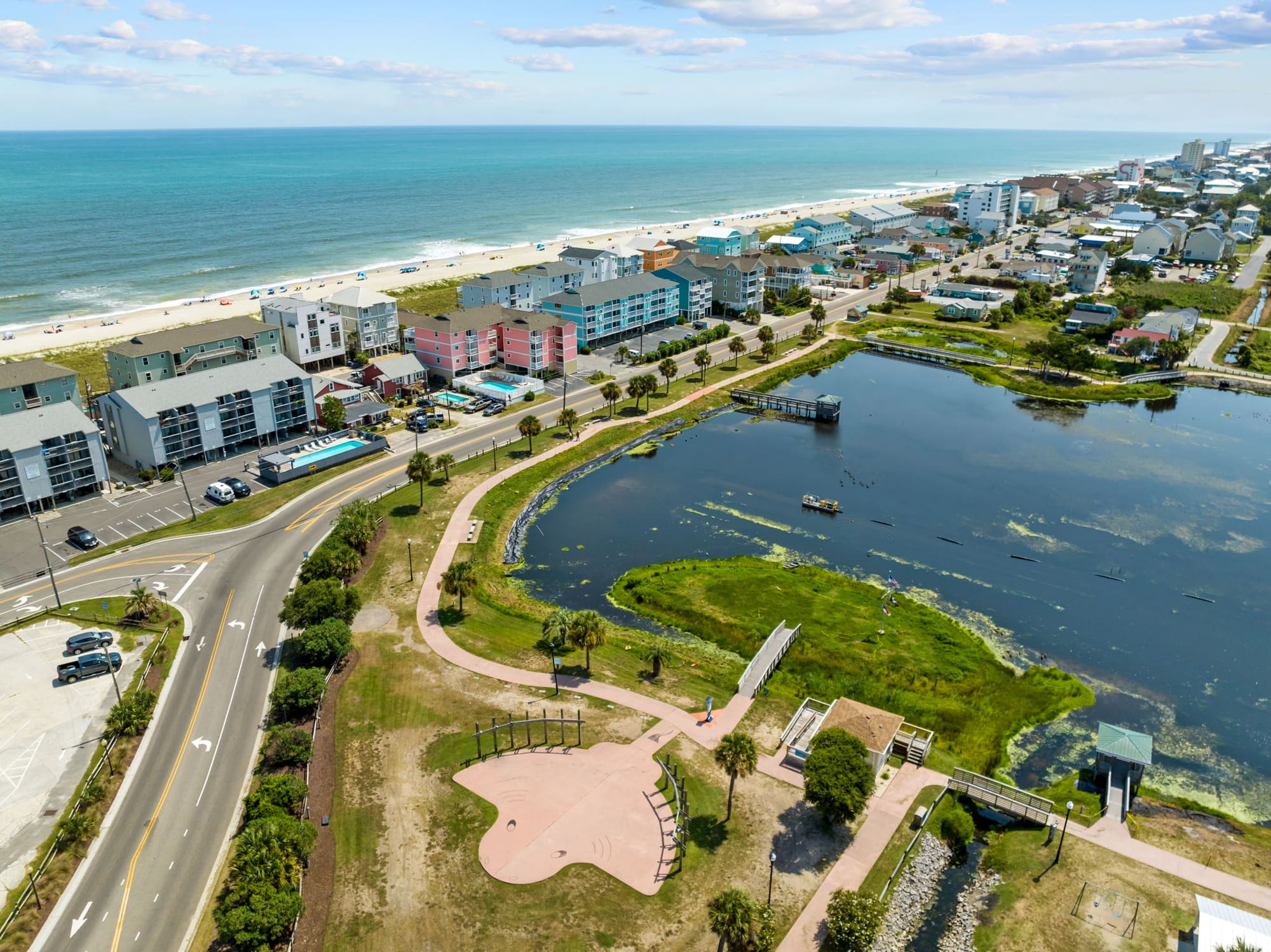
How Much Can a Carolina Beach Vacation Rental Earn?
What really drives vacation rental income in Carolina Beach: seasons, location, size, pets, amenities, pricing and costs, and how to get a projection for your own home.
Holidays at Carolina Beach: Island of Lights, Boardwalk on Ice and More
Island of Lights 2026 dates at Carolina Beach and Kure Beach: the lighting at the lake, Christmas parade, flotilla, tour of homes, Boardwalk on Ice and New Year's Eve.
Carolina Beach vs. Wrightsville Beach vs. Kure Beach: Which to Book
How Wilmington's three closest beach towns compare for a vacation rental: the vibe, food, things to do, kids, parking, dogs and who each one suits best.